Epoxy · polyaspartic · flake · quartz · garage floor repair
Garage Floor Epoxy & Coating in Kokomo
A Kokomo garage floor spends the winter under salt slush and the summer under hot tires. A coating that's ground in, moisture-tested and topped with the right clear coat handles both. One rolled onto an etched floor usually doesn't.
This page covers the systems, the prep that decides whether they last, the repairs that come first, and published prices, including when a store-bought kit is the honest answer.
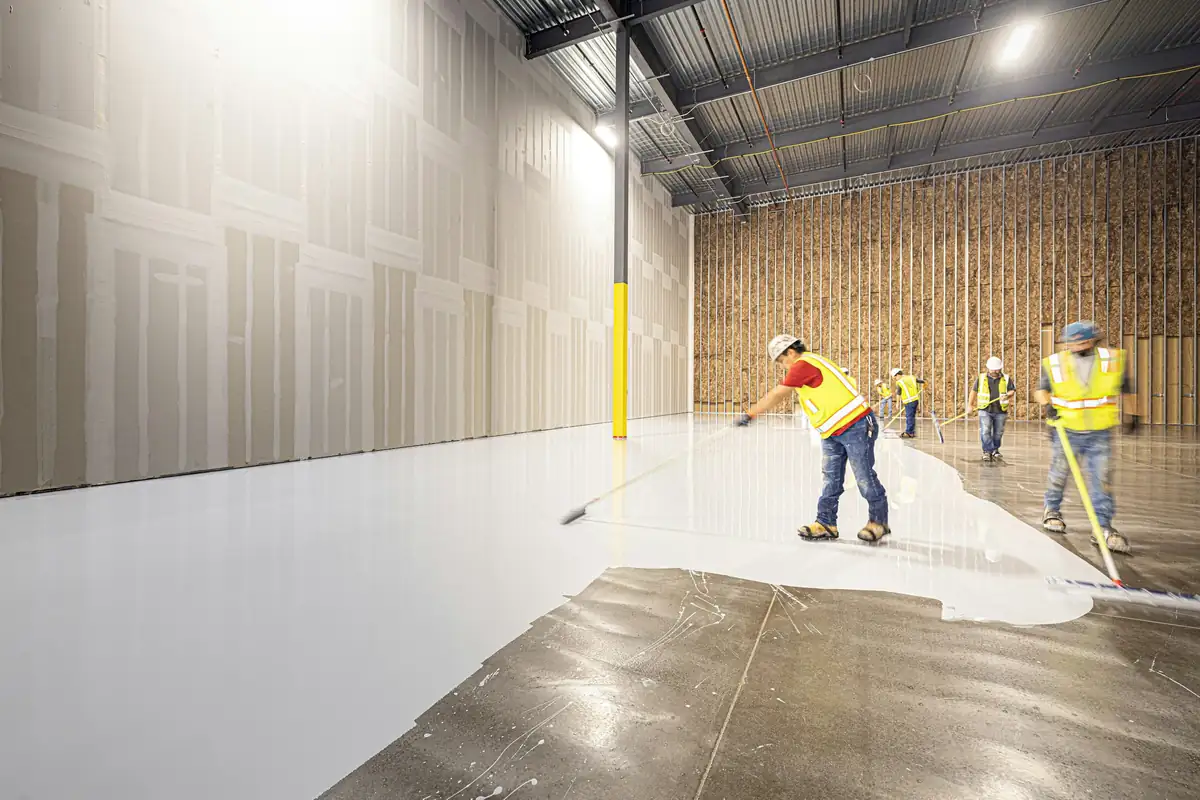
Epoxy Floor Coating Systems Compared
"Epoxy" gets used for every garage floor coating, but the systems behave differently. Most good residential floors are a hybrid: an epoxy or polyaspartic base, a flake broadcast, and a clear polyaspartic topcoat.
Thin water-based epoxy (most DIY kits)
The one-day kits sold at home centers, including the Rust-Oleum garage floor kits people search for, are thin coats designed to go on over an acid-etched or scrubbed floor. Fixr puts DIY materials at about $1 to $2 per square foot; HomeAdvisor lists professionally applied water-based epoxy at $2 to $5. Fine for a floor that sees light use and was clean and dry to begin with. They're thin, so they show every flaw, and hot-tire pickup is their most common complaint.
100% solids epoxy
Thick, hard and zero-VOC. One manufacturer's data sheet gives coverage of 160 square feet per gallon at 10 mils, requires the slab to be at least 50°F, and sets moisture limits of under 3 pounds by the calcium chloride test (ASTM F1869) and under 80% relative humidity by in-slab probe (ASTM F2170). It cures slowly: walkable in about a day, but keep vehicles off for about a week. Epoxy isn't UV-stable the way polyaspartic is, so a garage that gets sun through an open door needs a UV-stable topcoat over it.
Polyaspartic and polyurea
Fast-curing coatings: polyurea can harden in minutes and polyaspartic lets a floor go back into service quickly. Polyaspartic is UV-stable; polyurea can discolor in sunlight. A clear aliphatic polyaspartic topcoat is what gives a flake floor its hot-tire resistance and UV stability. Fixr lists polyaspartic at $5 to $10 per square foot. The catch is speed: it gives an installer little working time, so it's not a first-timer product.
Full-broadcast flake (chip) floor
A pigmented base coat, vinyl flakes broadcast until no base shows, excess scraped and vacuumed, then one or two clear topcoats. The flakes add texture for grip, hide small imperfections and repairs, and make salt residue far less visible. This is the most common garage floor coating we'd recommend for a Kokomo home garage.
Quartz and metallic epoxy
Quartz systems broadcast colored sand for maximum traction; they suit mudrooms, wash bays and commercial floors. Metallic epoxy gives a swirled, high-gloss showroom look; it's beautiful in a dry showroom and a poor match for a garage that gets slush, because it's smooth and shows scratches.
A Flake Garage Floor, Layer by Layer
- Clear polyaspartic topcoat
Aliphatic polyaspartic: the layer that resists hot-tire pickup and stays clear in sunlight. An anti-slip additive can go in here.
- Vinyl flake broadcast
Broadcast into the wet base until no base shows, then scraped and vacuumed. It adds grip and hides salt residue and repairs.
- Pigmented base coat
Epoxy or polyaspartic. A 100%-solids epoxy base wants the slab at 50°F or warmer and inside the moisture limits.
- Ground surface and repairs
Diamond-ground to open the surface; cracks and pits filled and ground flush. This is where most coatings win or lose.
- Garage slab
Often poured without a vapor retarder: the code exempts garages from the requirement under heated floors.
- Clay and ground moisture
Crosby and Brookston clay, with a wet-season water table 6 inches to 2 feet down. Moisture rising through the slab is what pushes coatings off.
Which Garage Floor Coating Fits Your Garage?
Has the slab been moisture-tested, or do you know it has a vapor barrier under it?
Do you park in it every day through salt season?
Test before you buy anything.
A calcium chloride test or in-slab humidity probes, read against the coating maker's limits. A slab over wet clay with no vapor barrier may need a moisture-mitigating primer, and that changes the price more than the flake color does.
A good kit may be enough.
On a dry, clean slab that rarely sees a car, a thin water-based epoxy kit is the honest budget answer. Expect it to show flaws and to be weak against hot tires if that ever changes.
A ground, full-broadcast flake floor with a polyaspartic topcoat.
Daily cars and salt slush call for grip, a thick build and hot-tire resistance. The clear aliphatic polyaspartic topcoat also stays clear in sunlight through an open door, which plain epoxy doesn't.
Why Garage Floor Coatings Peel: Moisture and Prep
The Kokomo moisture problem
Here's the part most garage-floor pages skip. The residential code requires a vapor retarder under heated floor slabs, but it exempts garages. So many Kokomo garage slabs were poured straight onto the ground, and that ground is mostly Crosby and Brookston clay with a wet-season water table that can sit 6 inches to 2 feet down, or at the surface in low spots. Moisture moving up through the slab is invisible until it pushes a coating off from underneath.
That's why the slab gets tested before anything is sold: a calcium chloride test or in-slab humidity probes, measured against the coating maker's limits. If a floor fails, it needs a moisture-mitigating primer, which costs more, or a different plan.
Grinding vs. acid etching
Coatings grip a surface profile, like paint grips sanded wood. Diamond grinding opens the surface and removes old sealers, laitance and stains; acid etching (what most kits rely on) cleans but leaves the weak top layer and any sealer in place. Industry guidance recommends grinding, and notes that a high percentage of coating failures come down to improper surface prep.
| DIY kit | Professional system | |
|---|---|---|
| Prep | Acid etch or degrease | Diamond grind, vacuum |
| Moisture test | Rarely | Before quoting |
| Crack and spall repair | Optional patch | Filled and ground flush |
| Thickness | Thin | Base + flake + topcoat |
| Hot-tire resistance | Weak point | Polyaspartic topcoat |
| Material / installed cost | About $1–$2/sq ft | About $5–$15/sq ft |
| Honest best use | Light-use garage, dry slab, tight budget | Daily parking, salt season, long life |
Garage Floor Repair Before the Coating
A coating is only as good as the slab under it, so repair is part of the job, not an extra:
- Cracks in the garage floor are cleaned out, filled with a rigid crack filler and ground flush. Moving cracks get a flexible joint instead, or they'll show through.
- Salt pitting and spalls near the door are patched with an epoxy or polymer repair mortar, the same idea as an epoxy concrete resurfacer, and ground level.
- Control joints are either filled and coated over or kept open, depending on whether the slab still moves.
- Oil stains are degreased and ground out; oil left in the concrete is a bond breaker.
- Sunken sections get lifted first: see concrete leveling.
- Heaved or broken slabs need replacing, not coating: see garage slabs and foundations.
A garage floor that's sound but rough can be refinished with a cementitious topping first; see concrete resurfacing. Cracked steps into the house and other concrete outside the garage are on concrete repair.
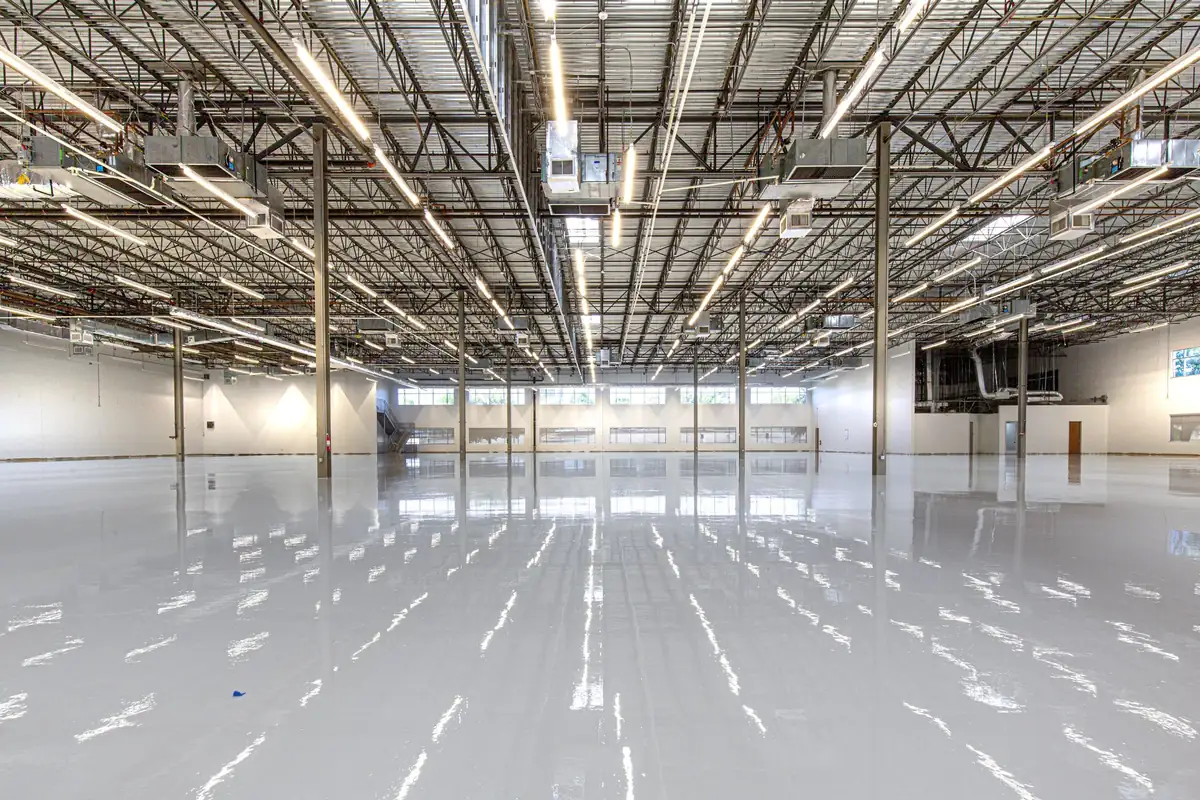
Epoxy Garage Floor Installation, Step by Step
Before the quote
Moisture and condition check
Test the slab for moisture, sound out hollow spots, note cracks, pitting, oil and old sealers.
Day 1, morning
Empty, grind, vacuum
Garage cleared, floor diamond-ground edge to edge, dust vacuumed rather than swept.
Day 1
Repairs
Cracks and spalls filled and ground flush; joints dealt with.
Day 1, afternoon
Base coat and flake broadcast
Pigmented base coat rolled out, flakes broadcast to full coverage while it's wet.
Day 2
Scrape, vacuum, topcoat
Loose flake scraped and vacuumed, clear topcoat applied, anti-slip additive if wanted.
After
Cure before cars
Foot traffic first; vehicles only after the topcoat's cure time, which is days for polyaspartic and about a week for epoxy.
Timing depends on the system and temperature. In an unheated garage, coatings need the slab at 50°F or more, which in Kokomo rules out most of December through February unless the garage is heated.
Garage Floor Coating Near Me: Flake Blends and Finishes
Flake color is the fun part. Practical rule for salt country: mid-tone, busy blends hide dried salt and road dust; very dark or very light solid floors show everything.
Tap a blend to see it larger.
-
Granite gray flake
Gray, black and white. The default for a reason: it hides salt residue and tire marks.
-
Tan and brown flake
Earth tones that hide road dust and dried salt slush between cleanings.
-
Salt and pepper
High-contrast black and white. Sharp-looking, shows dirt a little more.
-
Blue-gray flake
Gray with blue and white chips. Popular for shops and man caves.
-
Solid color, light flake
A colored base with a partial flake broadcast. Cheaper, but smoother and slicker.
-
Quartz texture
Colored quartz sand broadcast for maximum grip. Common in mudrooms and commercial floors.
Swatches are drawn illustrations, not product photos or a manufacturer's color line. Ask to see real chip samples on a board.
Garage Floor Coating vs. Salt and Hot Tires
Kokomo's street crews clear 339 road miles in a storm, and the brine on those roads ends up dripping off your car onto the garage floor for months. Bare concrete soaks it up, which is how garage slabs pit and scale near the door. A sealed coating keeps it on the surface where it can be squeegeed out.
Summer brings the other failure: hot tires. Tires coming off hot pavement soften thin coatings and can lift them where the tires sit. A clear polyaspartic topcoat over a properly bonded base is what resists it.
- Choose texture: full flake broadcast, an anti-slip additive in the topcoat, or both.
- Squeegee meltwater out instead of letting it pond; a mat under each car helps.
- Rinse dried salt off a few times a winter so grit doesn't wear the topcoat.
- Don't coat over a floor that's still wet from winter. Let it dry out in late spring first.
Garage Floor Epoxy Cost
HomeAdvisor's 2026 guide puts a two-car garage at $1,500 to $6,000 and the average concrete coating job around $2,526. Fixr's example two-car garage is 575 square feet. What pushes a Kokomo floor up the range: grinding off an old coating, crack and spall repair, a moisture-mitigating primer, and heat for a cold-weather install.
| Coating | Published range |
|---|---|
| One-car garage | $750–$3,000 |
| Two-car garage | $1,500–$6,000 |
| Three-car garage | $2,250–$9,000 |
| Water-based epoxy, installed | $2–$5 per sq ft |
| Polyaspartic | $5–$10 per sq ft |
| Polyurea | $3–$10 per sq ft |
| Thick epoxy build | $10–$15 per sq ft |
| DIY kit materials | About $1–$2 per sq ft |
Epoxy Flooring Near Me: Basements, Shops and Commercial Floors
Basement floors
Basement slabs sit lower, closer to that seasonal water table, so moisture testing matters even more than in a garage. Many basements pass; some need a vapor-mitigating primer; a few shouldn't get a film coating at all.
Workshop and pole barn floors
Shop floors take dropped tools, jack stands and chemicals. A thicker build with quartz or full flake and a chemical-resistant topcoat suits them. On a new shop slab, plan the coating before the pour (vapor barrier, finish) on the foundations and slabs page.
Commercial epoxy flooring
Small commercial floors such as showrooms, salons, offices and wash bays follow the same rules at a bigger scale. Large industrial floors with engineered coating specs are their own specialty; for those, get bids from crews that do that work every week. A concrete contractor who also pours the slab can coordinate both on smaller projects.
Garage Floor Coating Questions
How long does a garage floor coating last?
It depends far more on the prep than on the product. A thin coat rolled over an acid-etched floor can start lifting under hot tires within a year or two; a ground, moisture-tested floor with a full flake broadcast and a UV-stable topcoat lasts many years of normal use. Be wary of any lifespan promise from someone who hasn't tested your slab.
Can you put epoxy on a garage floor in winter?
Only if the slab itself is warm enough. One common 100%-solids epoxy requires the concrete to be at least 50°F, and an unheated Kokomo garage in January is well below that. Winter installs need the garage heated for days beforehand and through the cure; otherwise wait for spring.
Why did my DIY garage epoxy peel?
Usually one of three things: the floor was acid-etched instead of ground, so the coating never got a real grip; moisture coming up through the slab pushed it off; or hot tires softened a thin coat and pulled it up. Industry sources say a high percentage of coating failures come down to surface preparation.
Is an epoxy garage floor slippery?
A smooth, glossy coat can be slick with snowmelt on it. A full flake broadcast adds texture, and an anti-slip additive in the topcoat adds more. For a Kokomo garage that sees slush four months a year, we'd always add one or both.
Will salt damage a coated garage floor?
A properly installed, sealed coating keeps salt brine out of the concrete, which is one of the best reasons to coat a garage floor here. The brine still sits on top, so squeegee or rinse meltwater out the door now and then instead of letting it puddle all winter.
Can a cracked garage floor be coated?
Yes, if it's sound. Cracks are cleaned out, filled and ground flush before the base coat, and the flake hides most of the repair. A floor with a sunken section should be lifted first, and a heaved or broken slab needs replacing; a coating won't hold a moving slab together.
Get a Garage Floor Coating Estimate
Send the garage size, a photo of the whole floor with the door open, and close-ups of the worst cracks or pitting. Tell us if the floor has ever been painted or sealed, since old coatings have to be ground off.