Cracks · steps · porches · spalling · walls
Concrete Repair in Kokomo, Indiana
Nearly all concrete damage in Kokomo comes from three things: water held in clay, freeze-thaw, and road salt. Find your damage below to see what caused it and whether it's worth repairing.
Honest note up front: some of these you should leave alone, one you can fix yourself, and a few mean the concrete is done. We'd rather tell you that than sell a patch that fails by spring.
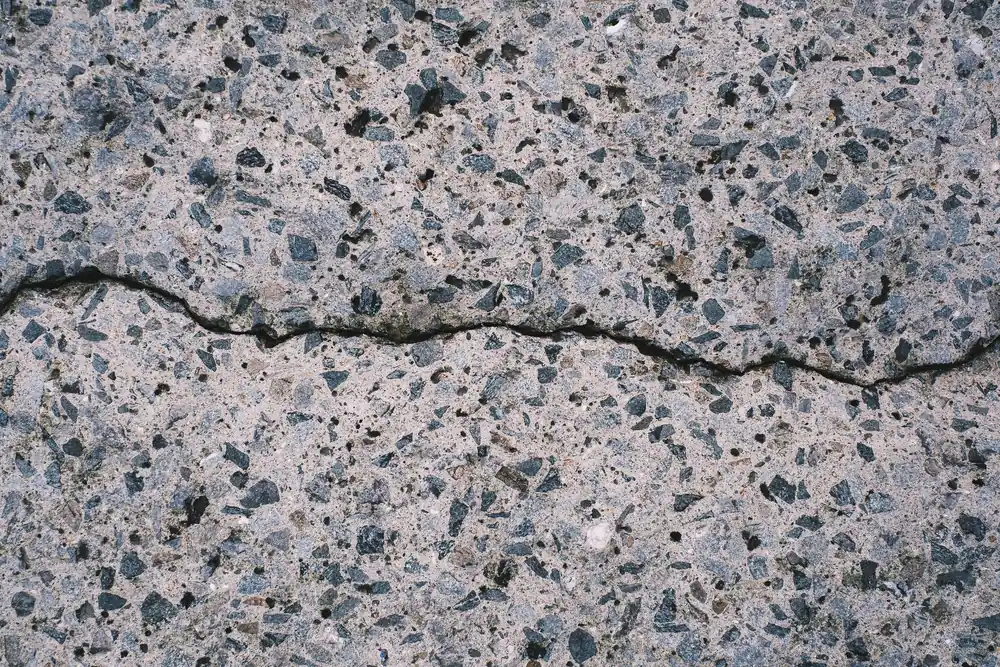
What's wrong with your concrete?
Fine web of surface cracks Crazing: cosmetic
A map pattern of hairline cracks, rarely more than 1/8 inch deep. NRMCA's guidance is that crazing doesn't affect structural integrity. It comes from finishing with bleed water on the surface or adding water. Leave it, or seal it to keep water out.
A few straight cracks, level on both sides Shrinkage: normal
All concrete shrinks, and "it is not possible to produce completely crack-free concrete." Tight, level cracks between joints just need routing and a flexible sealant to keep water and salt out of the base.
Short parallel cracks that showed up the first day Plastic shrinkage
Cracks a foot or three apart that formed while the concrete was still soft, usually from wind or heat drying the surface during finishing. They look bad but rarely go deep. Seal them.
Top layer flaking off in patches Scaling: salt and freeze-thaw
Salt water in the surface freezes and pops the top off, worst on concrete that was wet-finished, not air-entrained, or salted the first winter. Light scaling can be patched with a polymer-modified repair mortar or overlaid: see concrete resurfacing. Deep, spreading scaling usually means replacement.
Thin sheets breaking off a smooth floor Delamination
The top 1/8 to 1/4 inch letting go, usually on a hard-troweled finish that sealed the surface while air or water was still rising. Tap with a hammer: hollow sounds mark the area. Remove the loose layer, then patch or overlay.
Chunks popping out, rust stains Spalling over steel
Salt reaching steel too close to the surface makes it rust and swell, breaking off the concrete above it. Industry guidance is at least 2 inches of cover over steel in salt exposure. Cut back to sound concrete, treat or replace the steel, patch.
One side of a crack lower, slab tipped Settlement
The slab sank. If it's in one piece, lift it rather than patch it: see concrete leveling. Patching a sinking slab is money spent twice.
Slab pushed up, cracked across Heave from frost or roots
Wet clay freezing under the slab, or a root, pushed it up. Heaved concrete can't be lowered by lifting; the panel gets cut out, the cause dealt with, and replaced.
Concrete Crack Repair: Which Cracks to Fix, Which to Leave
A crack is a symptom. The repair depends on whether it's still moving.
- Dormant, level cracks in outdoor slabs: rout the crack to a clean edge, add backer rod if it's wide, and fill with a flexible polyurethane or silicone sealant. It flexes with the seasons and keeps water out of the base. This is the right cement crack repair for most walks, patios and drives.
- Structural cracks in walls and thick slabs that have stopped moving: epoxy injection or an epoxy concrete patch bonds the two sides and restores strength. Epoxy is rigid, so on a slab that moves every winter the crack just reopens beside it.
- Cracks with movement: a crack with one side higher, or one that grows every year, is a settlement or heave problem first. Sealing it is fine as a stopgap; the fix is lifting or replacement.
- Cracks in a concrete floor indoors, like a basement or shop slab, are usually shrinkage and can be sealed or filled flush. Garage floors being coated get their cracks repaired as part of the coating prep.

Concrete Step Repair and Porch Repair
Steps and stoops get the most salt per square foot of any concrete at a Kokomo house, and their thin outside corners freeze from three sides. That's why step edges crumble first.
What can be repaired
- Crumbled step nosings and corners: cut back to sound concrete, anchor pins, form, and rebuild with polymer-modified repair mortar.
- Cracks across treads: rout and seal.
- A stoop pulling away from the house: usually lifted back and sealed at the wall.
- Spalled spots on a porch slab: patched after the loose concrete and any rusting steel are dealt with.
When the steps are done
Steps that are crumbling on every tread, hollow-sounding throughout, or broken from the stoop are cheaper to replace than to keep patching. New exterior steps and porches call for 3,500 psi, air-entrained concrete under the residential code's severe-weathering column.
Concrete Repair Companies: Repair or Replace, Honestly
| If… | Repair | Replace |
|---|---|---|
| Damage is in one or two spots | Yes | No |
| Patches would cover much of the slab | No | Yes |
| The slab is level and solid underneath | Yes | No |
| It's still settling or heaving | Stopgap only | Yes, after fixing the cause |
| Scaling is deep and spreading | Short-term | Yes |
| Color match matters (front entry) | Whole-panel replacement | Or a full new surface |
Is this a do-it-yourself crack fix?
Lay a straightedge across the crack. Are both sides at the same height?
Where is it?
Is it narrower than a credit card is thick, with solid, unflaking concrete around it?
Do it yourself. No need to hire anyone.
Clean out the crack, then fill it with a tube of flexible polyurethane or silicone crack sealant on a dry afternoon above freezing. It keeps water and salt out of the base.
That's movement, not just a crack.
Sealant is fine as a stopgap. The fix is lifting the low side or replacing a heaved panel; see concrete leveling for a slab that sank in one piece.
Get it looked at.
Steps and walls carry loads and freeze from more sides, and a crack that lets water into a basement is a foundation question. Send photos first; it may still be a small job.
Send photos before buying anything.
A wide crack may need routing and backer rod, and flaking around it means the surface needs its own repair. A photo with a coin for scale is usually enough to say which.
Cement Repair on Walls, Floors and Pool Decks
Crumbling garden walls
Garden and landscape walls crumble at the top and at the soil line, where water sits and freezes. Loose concrete is cut back and rebuilt; a wall that's leaning is a retaining wall problem, not a surface repair. Cracked or leaking house foundation walls are a separate foundation repair job.
Concrete floors
Basement and shop floor cracks are usually shrinkage. Fill them flush; if the slab is heaving or sinking, find out why before patching. For a garage floor that needs repair before an epoxy or flake coating, see garage floor coatings.
Pool deck concrete repair
Pool concrete repair is mostly cracks, popped coping joints and scaling from pool chemicals and freeze-thaw. Seal joints with a flexible sealant, patch spalls, and recoat with a textured, non-slick finish.
Concrete Repair Cost in Kokomo
Repairs are small jobs with real setup costs, so most carry a minimum charge. HomeAdvisor's 2026 guide puts the average concrete step repair around $500. The cause matters more than the patch: if water or settlement isn't dealt with, you'll pay for the same repair again.
| Repair | Published range |
|---|---|
| Concrete step repair, typical | $250–$750 (average $500) |
| Sealing step cracks | About $100 |
| Reinforcing steps | About $200 |
| Patching crumbling steps | About $650 |
| Crack filling per linear foot | $0.50–$3 (minimum about $100–$150) |
Concrete Repair Questions from Kokomo
Will a concrete patch match the old color?
No, not at first, and the industry's own guidance says so: repair material will not match the color of the original concrete. It weathers closer over a few seasons. Where looks matter, cutting out and replacing a whole panel between joints often looks better than a patch in the middle of one.
Can I fix concrete cracks myself?
Tight, level cracks in a sidewalk or patio, yes: clean them out and fill with a flexible concrete crack sealant from the hardware store. That's honest advice that costs us a small job. Cracks with one side higher, cracks that keep growing, crumbling steps, and anything structural are worth a look from someone who does this for a living.
Is epoxy good for concrete crack repair?
For the right crack. Epoxy is strong and bonds the two sides together, so it's good for dormant cracks in walls and slabs. On an outdoor slab that moves with the seasons, a rigid epoxy fill just moves the crack over an inch; a flexible sealant is the better choice there. Leaking basement and foundation wall cracks are a foundation repair job.
Why is my concrete flaking off on top?
That's scaling. It comes from freeze-thaw and salt working on a surface that was too wet when finished, overworked, not air-entrained, or salted in its first winter. Light scaling can be repaired or overlaid; deep, spreading scaling usually means the surface concrete is poor and replacement is the long-term fix.
How long do concrete repairs last?
A sealed crack might need resealing every few years. A properly bonded step-edge repair can last many years if salt is kept to a minimum. A patch over a slab that's still moving won't last at all, which is why we look at the cause before quoting the repair.
Get a Concrete Repair Estimate
A close-up of the damage with a coin for scale, plus one wider photo of the whole slab or steps, is usually enough for us to say "repair," "lift" or "replace" and give a range.
If the answer is replacement, the same concrete contractor can price the new work, from a single panel to a full driveway.