Driveway replacement · new driveways · approaches
Concrete Driveway Contractors in Kokomo
A Kokomo driveway fails from the bottom up: water in the clay under it, salt on top of it, and a frost line 30 inches down. We build the part you never see first, then pour a slab sized for your vehicles.
Driveways are the most common job for any concrete contractor in Kokomo, and the one where bids differ the most, mostly because of what's left out of them. This page walks through what a complete bid includes, the city paperwork at the curb, and real cost ranges.
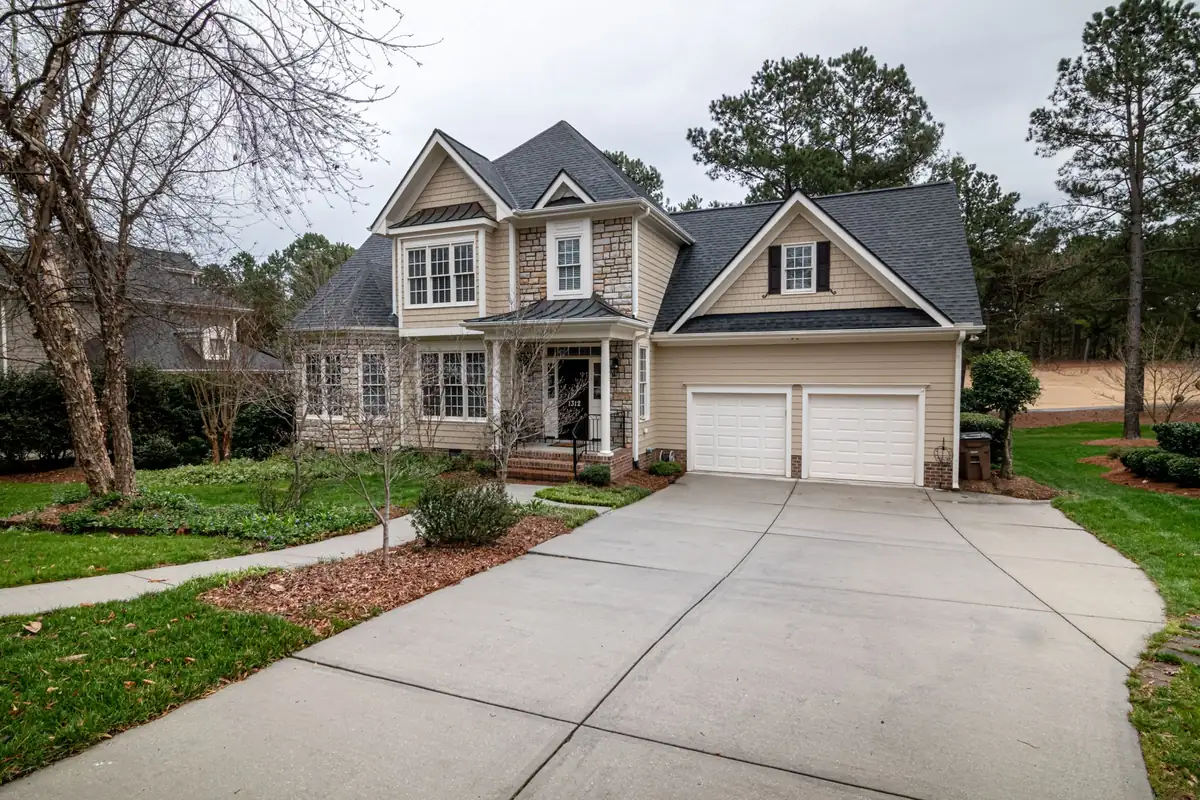
Concrete Driveway Replacement: What a Good Kokomo Bid Includes
Two driveway bids for the same house can be thousands apart and both be "honest." The gap is usually scope. Hold every bid up against this list; anything missing is either included and unwritten, or not happening.
- Tear-out and haul-away of the old slab, saw-cut clean where it meets anything staying (garage apron, walk, curb).
- Subgrade correction. Soft, wet clay dug out, not covered over. On Crosby and Brookston soils this is where driveways are won or lost.
- Compacted crushed-stone base, with a stated depth.
- Thickness in writing: 4 in. minimum, 5–6 in. if a truck or trailer lives there, 6 in. through the city right-of-way.
- Grade: fall away from the garage and house, toward the street or a lawn edge.
- Mix: air-entrained concrete; in the right-of-way, Class A per the INDOT spec the city uses.
- Joints laid out on paper before the pour, and isolation joints at the garage, walks and curb.
- Permit and 811 locate, and who is responsible for each.
- Curing, and first-winter instructions you can stick on the fridge.
Budget 10–15% for what's under there. Older Kokomo driveways often turn out to be two slabs stacked, or a slab poured on dirt with no base. Nobody can see that until the first panel comes up, so a bid should say how it'll be handled.
- Fall away from the garage. The slab slopes toward the street or a lawn edge, never back toward the garage or house. A drive that drains the wrong way has to be torn out and re-graded; no patch fixes grade.
- Control joints. Spaced 24 to 36 times the thickness (8 to 12 feet on a 4-inch drive, never over 15), with no panel longer than 1.5 times its width. Joints decide where the slab cracks.
- The slab: 4 to 6 inches, air-entrained. Four inches for cars, 5 to 6 for a pickup, trailer or RV. Right-of-way work uses INDOT's 6.5% ±1.5% air content.
- Compacted crushed-stone base. Its depth belongs in the bid in writing. On wet clay an extra inch of base does more than an extra inch of concrete.
- Clay till subgrade. USDA puts the wet-season water table in Crosby soils 6 inches to 2 feet down. Soft spots get dug out and replaced with stone, not covered over.
- The approach and curb cut. Inside city limits this is right-of-way work: its own permit, a 6-inch section, Class A concrete, and curb replaced at the original elevation.
Kokomo Driveway Permits, Curb Cuts and the Approach
Nobody likes paperwork, but the curb is where a driveway job stops being private property. Here's what the City of Kokomo's own documents say.
Inside city limits
- Driveway/Sidewalk Permit. The city's permit page lists one for "installing/replacing a driveway or sidewalk," issued from the first floor of City Hall at 100 S. Union St.
- Right-of-way permit for curb cuts. Kokomo Code §97.16(C)(10) requires a permit for "the installation or repair of driveways or sidewalks that require curb cuts." The ordinance sets a minimum $25 application fee for this type, it's exempt from the right-of-way bond, and each cut needs its own permit.
- Five working days. The application has to be in at least 5 working days before work starts. A contractor who says "we'll start Monday" on a Friday call either has it handled or doesn't.
- Recently paved streets cost more to cut. Streets paved within three years are "protected." The 2016 ordinance added $300, $200 or $100 to a permit when the street, curb or walk was resurfaced within 12, 24 or 36 months. Fees may have changed since; confirm at City Hall.
- How the approach gets built. Concrete comes out "to the nearest control joint," the driveway section in the right-of-way is replaced at 6 inches, the mix is Class A (6 bags per cubic yard minimum) under INDOT Section 611, and curb is replaced "at the original elevation. Standing water will not be accepted."
Outside city limits
In unincorporated Howard County, a new drive onto a county road needs a driveway permit from the Howard County Highway Department (765-456-2802). New homes also go through the Plan Commission's Improvement Location Permit. Replacing an existing private drive that doesn't touch the road is usually simpler, but call before you assume.
Every job also needs an Indiana 811 locate request at least two full working days before digging. That's state law, not a city rule.
Concrete Driveway Repair or Replace? A Panel-by-Panel Call
You don't always need a new driveway. Look at each panel (the squares between joints) on its own. Often two panels need replacing and the rest need nothing, or the whole thing just needs lifting.
| What you see | Likely cause | Usual fix | Full replacement? |
|---|---|---|---|
| A panel sank at the garage or walk, still in one piece | Fill settled or washed out under it | Lift it: driveway leveling | No |
| Hairline cracks, slab level | Normal shrinkage | Leave it, or rout and seal | No |
| Surface flaking, slab sound and flat | Salt and freeze-thaw scaling | Driveway resurfacing overlay | No |
| One or two panels broken into pieces | Point load, root, or a soft spot | Cut out and replace those panels | Not the whole drive |
| Cracks with one side higher | Heave from water and frost | Replace the panel and fix the drainage | Often, if it's widespread |
| Drains toward the garage or house | Wrong grade from the start | Tear out and re-grade | Yes |
| Patched, scaled and cracked everywhere | End of service life | Replace | Yes |
Patching single cracks and broken step edges is covered on our concrete repair page. A replacement panel never matches the old concrete's color exactly; it blends in over a few seasons. Patterned or exposed-aggregate drives are a different job; see stamped and decorative concrete.
Thickness, Mix and Joints for a Driveway That Sees Salt
- Car-only driveway
- 4 in. minimum5–6 in. for trucks, trailers, RVs
- Right-of-way section
- 6 in.City of Kokomo handbook
- Entrained air
- 6.5% ±1.5%INDOT 702.05
- Joint spacing
- 8–12 ft on 4 in.24–36× thickness, 15 ft max (NRMCA)
- First winter
- No deicerssand for traction (NRMCA CIP 2)
Why air, and why it matters more here than thickness
Air-entrained concrete is full of microscopic bubbles that give freezing water somewhere to go. Kokomo averages about 131 nights a year at or below freezing, and every thaw puts salty water back into the surface. The industry guidance for exterior slabs in salt country is about 4,000 psi with roughly 6% air; INDOT's spec for city right-of-way work is 6.5% ±1.5%. A driveway poured without air can look perfect for two winters and then start shedding its top layer.
Rebar, mesh or fiber?
None of them stop cracks; the industry's own sheet says "wire mesh will not prevent cracking." Steel holds cracks tight once they form, which is worth paying for in thicker driveways and over soft spots. Joints are what decide where the cracks go.
Joints are the crack plan
Concrete shrinks and moves, so it will crack. Joints decide where. The guideline is spacing of 24 to 36 times the thickness (8 to 12 feet on a 4-inch slab, never more than 15), panels no longer than 1.5 times their width, no L-shaped panels, and isolation joints where the drive meets the garage, walks and curb.
Finish: broom, not steel trowel
A broom finish gives traction on ice and leaves the air near the surface intact. A slick hard-troweled finish on an outdoor slab with entrained air invites delamination, where the top 1/8 to 1/4 inch lets go.
Concrete vs. Asphalt or Tar-and-Chip Driveway
People searching "tar driveway" or "chip and seal" in Howard County are usually weighing cost against lifespan, especially on long country drives. Honest comparison: those are paving jobs, not concrete work. For a long rural lane, tar-and-chip or gravel can be the sensible choice, and a paving company is who you want for it.
- Concrete: highest upfront cost per square foot, long life, no regular sealcoating, best near garages and walks.
- Asphalt: lower upfront cost, needs sealcoating every few years, softens in summer heat.
- Tar-and-chip: cheapest hard surface for long drives, rough texture, needs re-chipping.
- Pervious or permeable pavement: lets water through; only worth it where the soil below can take water, which Kokomo's clay mostly can't without an engineered stone reservoir.
A common split: concrete for the apron and the first stretch at the garage, where turning tires and salt do the damage, and a cheaper surface for the rest of the lane.
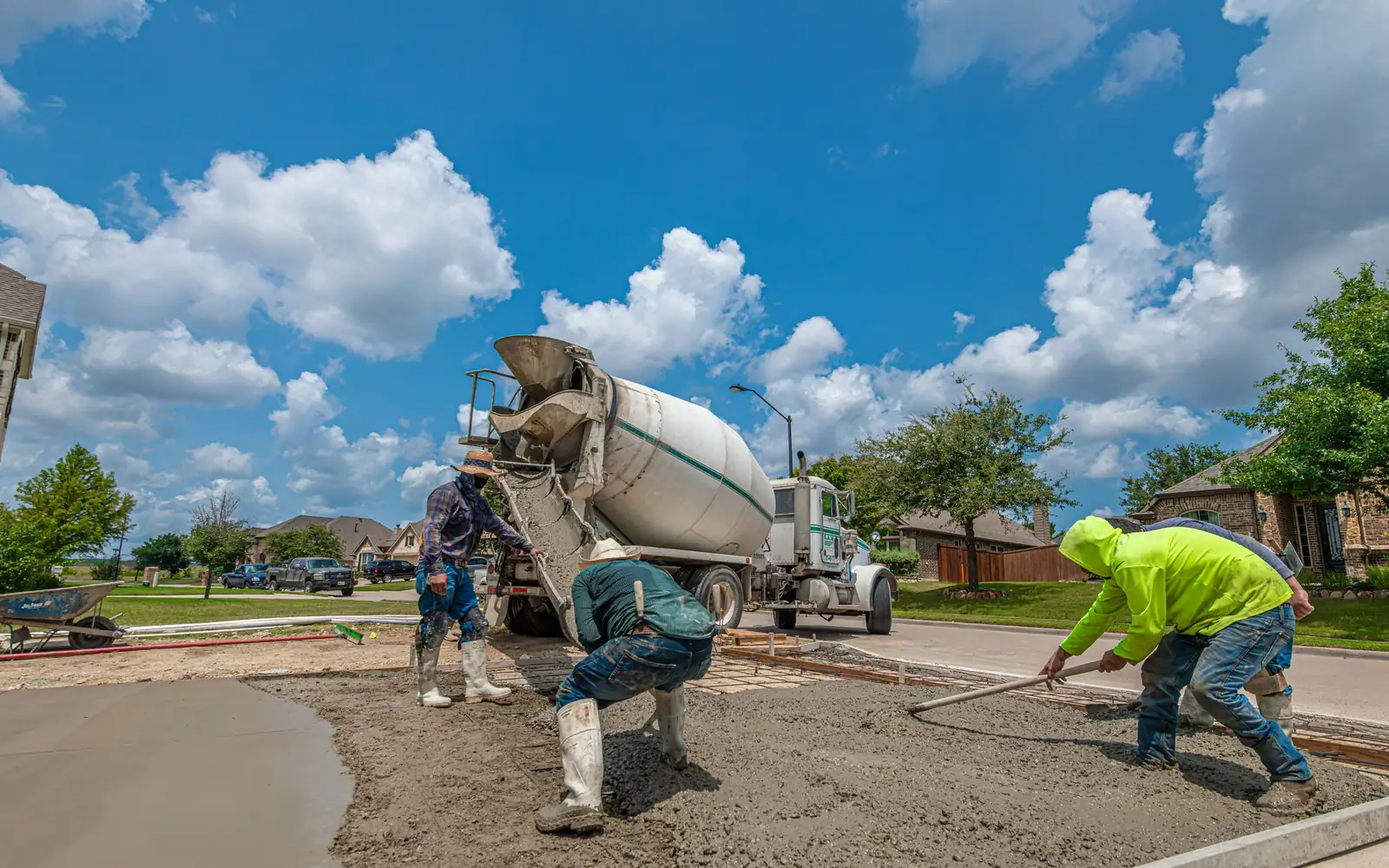
Concrete Driveway Cost in Kokomo
No Kokomo contractor publishes driveway prices, so here are the national cost-guide ranges and an estimator built on them. Real Kokomo prices depend on tear-out, base depth, access for the truck, and the approach.
| Item | Published range |
|---|---|
| New driveway, national typical job | $2,700–$14,500 (average $6,400) |
| Broom-finish driveway per sq ft | $8–$12 |
| 24×24 broom-finish driveway | $3,460–$6,910 |
| Tear-out and haul-away | $1–$4 per sq ft |
| Replacing damaged driveway slabs | $6–$14 per sq ft |
| Driveway repair, national average | $829–$2,925 |
Permit costs are separate. The curb-cut permit's ordinance minimum is $25, plus a surcharge on recently paved streets.
Concrete Driveway Contractors Near Me: When to Book in Kokomo
Spring and early summer fill up first. Late summer is the best time to pour: warm enough to cure well, and time for the slab to mature before salt season. Pouring is possible in cold weather, with heated materials and blankets once air temperatures are at or below 40°F, but it costs more and the slab goes into its first winter young.
New-driveway advice that fails a Kokomo winter
-
"Pet-safe" or "concrete-safe" melt is fine on a new drive.
No deicer of any kind the first winter; use clean sand for traction. After that, rock salt or calcium chloride is acceptable, but never magnesium- or ammonium-based products on concrete of any age.
-
Seal it right away with a glossy sealer.
The recommendation is a breathable silane or siloxane penetrating sealer, applied the next late summer after a few dry days. It soaks in and slows salt water instead of sitting on top as a film.
-
The slush the car drags in will wash off on its own.
Tires carry brine from the city's salted streets onto the drive, and it collects where the car stops. The ready-mix industry's advice (NRMCA) is to hose it off a new driveway or garage slab.
-
Wire mesh keeps a driveway from cracking.
The industry's own sheet says "wire mesh will not prevent cracking." Steel holds cracks tight; joints decide where they form.
Concrete Driveway Questions from Kokomo Homeowners
Do I need a permit to replace my driveway in Kokomo?
Yes. The City of Kokomo lists a Driveway/Sidewalk Permit for "installing/replacing a driveway or sidewalk," and if the work includes the curb cut or the approach in the street right-of-way, that part needs a right-of-way permit too. Apply at least 5 working days before work starts. Outside city limits, a new driveway onto a county road goes through the Howard County Highway Department.
How thick should a concrete driveway be?
Four inches is the accepted minimum for passenger cars, and 5 to 6 inches is the usual recommendation for pickups, trailers or an RV. Through the city right-of-way, Kokomo's handbook calls for a 6-inch driveway section. On Kokomo's wet clay soils we'd rather spend money on a deeper stone base than on a sixth inch of concrete across the whole drive.
When can I drive on a new concrete driveway?
Walk on it after a day or two. Keep cars off for about a week in warm weather and longer when it's cool, because concrete gains strength more slowly as temperatures drop. Heavy trucks and trailers should wait longer than that.
Should I seal a new concrete driveway?
Yes, but not with a shiny film, and not right away. The industry recommendation is a breathable silane or siloxane penetrating sealer, applied in late summer after a few dry days. It soaks in and slows salt water from getting into the surface, which is the thing that scales Kokomo driveways.
Can you pour a driveway over the old one?
Rarely a good idea. A new slab poured on top of a cracked or settled one inherits its cracks and movement, raises the drive above the garage floor and the sidewalk, and the city expects concrete in the right-of-way removed to the nearest joint and replaced at grade. If the old slab is sound but scaled, an overlay is the cheaper, honest option.
Get a Concrete Driveway Estimate
Send the rough length and width, a photo from the street showing the curb, and one from the garage looking out. Tell us what parks on it. We'll answer with a range or a time to measure.